Zen Meditation

坐禅
(Zazen)

The heart of Zen Buddhism is not a theory but a posture: sitting still, breathing, and meeting your own mind directly. This page teaches the complete practice of zazen, from how to sit to what to do with your thoughts.

What Is Zen Meditation?

Just sitting, fully awake

Zen meditation, or zazen, is the seated meditation at the centre of Zen Buddhist practice: you sit upright and still, let the breath settle into its natural rhythm, and allow thoughts to arise and pass without following them. Rather than aiming at relaxation or a special state, zazen is the direct practice of being fully present with things exactly as they are.

That simplicity is deceptive. Most meditation styles give the mind a job: repeat a mantra, scan the body, generate a feeling. Zazen strips the job away. In the beginner's form you count breaths, and in the mature form, shikantaza, you simply sit. What remains when there is nothing to do is the mind itself, and watching it settle is where all the benefits people report from Zen practice begin: steadiness under pressure, a longer gap between impulse and action, and a quiet that does not depend on circumstances.

Zazen sits within a wider tradition of practices; if you want to see how it compares with vipassana, metta and the other Buddhist forms, our guide to Buddhist meditation practices puts them side by side.

The Posture: How to Sit

A stable base, an upright spine, a soft gaze

Everything in zazen is built on the posture, because a body that is stable and alert invites a mind that is stable and alert. Choose whichever base your body allows:

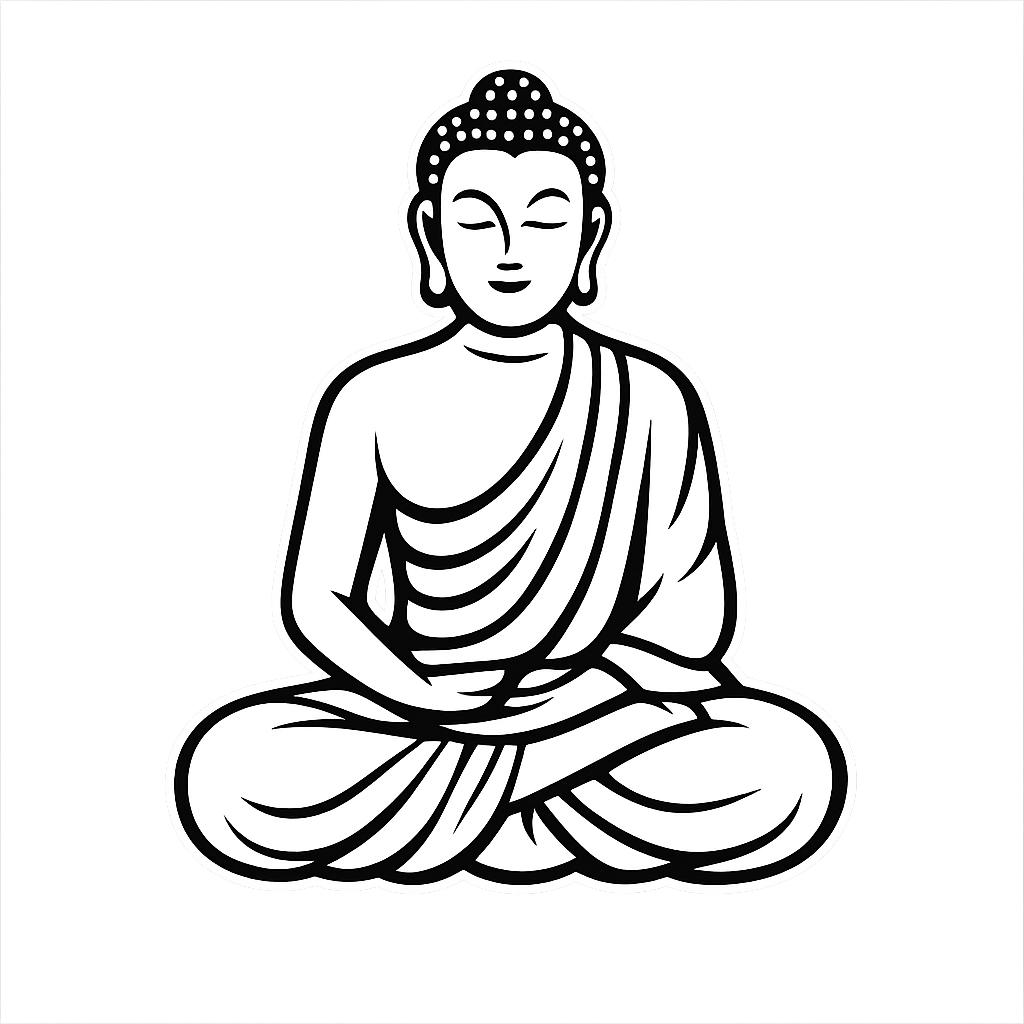
  1. Choose your seat. Cross-legged on a cushion (Burmese, with both shins on the floor, is the most accessible), kneeling astride a cushion (seiza), or sitting on a firm chair with both feet flat and your back away from the backrest. All three are fully legitimate.
  2. Raise the hips above the knees. Sit on the front third of the cushion or chair so the pelvis tips slightly forward. This one adjustment lets the spine rise naturally instead of being held up by effort.
  3. Lengthen the spine. Imagine the crown of the head lifting gently toward the ceiling. Tuck the chin slightly. Ears over shoulders, nose over navel, as the old instruction puts it.
  4. Place the hands in the cosmic mudra. Rest the right hand palm-up on your lap, the left hand palm-up on top of it, and let the thumb-tips touch lightly, forming an oval. When attention fades, the oval collapses — the hands are an honesty meter.
  5. Soften the gaze. Eyes half-open, unfocused, resting on the floor about a metre ahead. The mouth stays closed, breathing through the nose, tongue resting on the roof of the mouth.
  6. Sway and settle. Rock gently left and right a few times, letting the movements shrink until you come to rest at centre. Take one deep breath, let it go, and begin.

The Practice: What To Actually Do

Counting the breath, and the art of returning

Once seated, give attention to the breath without controlling it. The classic beginner's method is breath counting: on the first exhale, silently count one; on the next, two; up to ten, then begin again at one. If you lose the count — and you will, hundreds of times — simply start again at one. Losing the count is not failure. Noticing that you lost it is the exact moment of awakening the practice trains, repeated over and over until it becomes your default.

Thoughts are not the enemy. Zazen treats them like traffic outside the window or clouds crossing the sky: present, sometimes loud, not something you need to board. When you find yourself halfway through a story about tomorrow's meeting, there is no need for judgement or commentary. Return to one. The instruction fits in a sentence and takes years to exhaust: sit down, count the breath, come back.

As the counting steadies over weeks and months, you can let it fall away and follow the breath without numbers, and eventually practise shikantaza — just sitting, with no object at all, resting in open awareness of whatever arises. There is no hurry to get there; the counting is not a beginner's crutch but a complete practice in itself.

Kinhin: Walking Between Sittings

Meditation that moves

In a zendo, periods of zazen are separated by kinhin, slow walking meditation: hands folded at the chest in shashu, steps of half a foot-length timed to the breath, attention resting on the soles of the feet. At home, a few minutes of kinhin between two sittings, or on its own down a hallway, keeps the meditative thread unbroken while relieving the knees. Our walking meditation guide teaches the full kinhin form along with everyday variations you can use on any street.

Your First Two Weeks

A plan small enough to survive real life

  1. Days 1–3: Five minutes of breath counting each morning, before your phone gets your attention. Set a timer with a gentle bell so the clock stops being your business.
  2. Days 4–7: Same five minutes, and once during the day notice the moment you sit down — at a desk, on a bus — and take one conscious breath before doing anything else.
  3. Week 2: Extend to ten minutes. Add two minutes of kinhin afterwards if the sitting leaves your legs complaining.
  4. Ongoing: Ten to twenty minutes daily is a complete, serious practice. If you are brand new to meditation generally, our beginner's guide covers the universal groundwork, and guided zazen sessions in the Saffron app can carry the instructions for you until they are second nature.

Difficulty is part of the design. Restlessness, boredom, sleepiness and doubt all visit every practitioner — in Zen they are met the same way as thoughts: noticed, allowed, not fed, returned from. If sitting itself is physically painful, change your base rather than enduring; pain is information, not achievement.
Zen Meditation: Common Questions

How long should a zen meditation session be?
Start with five to ten minutes daily and hold that for two weeks before sitting longer. In Zen centres a single period of zazen is usually 25 to 40 minutes, but length matters far less than showing up every day. Ten minutes daily does more than an hour once a week.
Should my eyes be open or closed during zazen?
Traditionally half-open, with a soft, unfocused gaze resting on the floor about a metre in front of you. This keeps you present rather than drifting into drowsiness or daydream. If half-open feels impossible at first, closed eyes are fine while you settle into the practice.
What do I do when thoughts keep coming?
Let them come, and let them go. Zazen does not ask you to stop thinking; it asks you not to chase the thoughts or push them away. When you notice you have been carried off, return to the breath or the posture without commentary. That return is the practice itself, not an interruption to it.
What is the difference between zazen and shikantaza?
Zazen is the general term for Zen sitting meditation. Beginners usually start by counting breaths from one to ten. Shikantaza, meaning just sitting, is the mature form practised especially in Soto Zen: no counting, no object, simply sitting in open, alert awareness. Most people move toward it gradually as concentration steadies.
Do I need a cushion or special equipment?
No. A zafu (round cushion) helps the hips sit higher than the knees, which keeps the spine comfortable, but a folded blanket or an ordinary firm chair works. The only requirements are a stable base, an upright spine, and a place you will actually use every day.
Can I practise zen meditation without being a Buddhist?
Yes. Zazen requires no beliefs, no membership and no ritual. Many people practise it purely for the steadiness and clarity it develops. The Buddhist context deepens the practice for those who want it, and our Buddhist teachings pages are there when you are curious, but the sitting stands on its own.
Is guided zen meditation acceptable, or must it be silent?
Silence is the traditional form, but guidance is how most people successfully learn the posture and the attitude. A sensible path is to begin with guided sessions, then progressively sit unguided as the instructions become second nature. Saffron includes both guided zazen and a plain meditation timer with bells for silent sitting.